
Successful Hip Fracture Management at IRED Hospital
Hip fractures are among the most common and serious injuries affecting elderly individuals. Immediate diagnosis and timely surgical intervention are essential to restore mobility, reduce complications, and improve quality of life.
At IRED Hospital, our experienced orthopaedic surgeons provide comprehensive hip fracture management using advanced surgical techniques, modern imaging, and multidisciplinary rehabilitation to help patients regain independence.
Case Overview
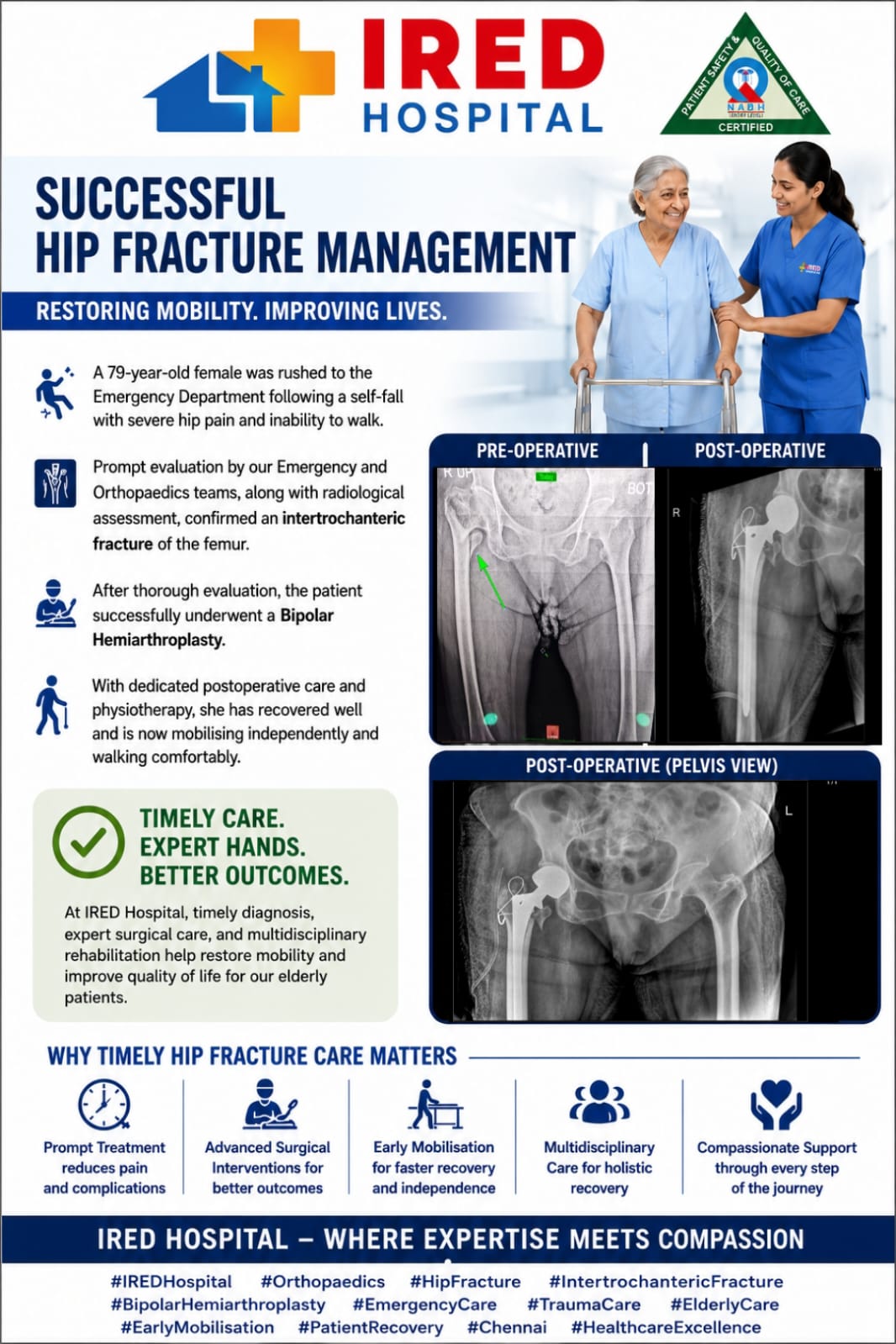
A 79-year-old female was brought to the Emergency Department after suffering a fall at home. She experienced severe hip pain and was unable to walk.
Our emergency physicians and orthopaedic specialists promptly evaluated the patient. Radiological investigations confirmed an Intertrochanteric Fracture of the Femur, a common fracture occurring in elderly patients with osteoporosis.
Following comprehensive assessment, the patient successfully underwent Bipolar Hemiarthroplasty, a surgical procedure that replaces the damaged portion of the hip joint while preserving stability and enabling early mobilisation.
With dedicated postoperative rehabilitation and physiotherapy, the patient recovered well and regained the ability to walk comfortably.
What is an Intertrochanteric Fracture?
An intertrochanteric fracture occurs in the upper portion of the femur (thigh bone), between the greater and lesser trochanters. It commonly results from falls in older adults and often requires surgical management for optimal recovery.
Common symptoms include:
- Severe hip pain
- Inability to stand or walk
- Swelling around the hip
- Shortened or externally rotated leg
- Difficulty bearing weight
Bipolar Hemiarthroplasty – An Effective Treatment
Bipolar hemiarthroplasty is a proven surgical option for selected hip fractures, particularly in elderly patients.
Benefits include:
- Faster pain relief
- Early mobilisation
- Reduced hospital stay
- Improved hip stability
- Better functional recovery
- Lower risk of prolonged bed rest complications
Why Early Hip Fracture Treatment Matters
Timely medical intervention significantly improves patient outcomes.
Benefits of early treatment include:
- Reduced pain and complications
- Early mobilisation
- Faster rehabilitation
- Better surgical outcomes
- Reduced risk of blood clots and pneumonia
- Improved quality of life
- Faster return to daily activities
Comprehensive Hip Fracture Care at IRED Hospital
Our multidisciplinary approach includes:
- 24×7 Emergency Services
- Advanced Radiology & Imaging
- Expert Orthopaedic Surgeons
- Modern Operation Theatres
- Joint Replacement Procedures
- Trauma Care Specialists
- Physiotherapy & Rehabilitation
- Compassionate Nursing Care
- Postoperative Recovery Support
Why Choose IRED Hospital?
- Experienced Orthopaedic Team
- NABH Certified Hospital
- Advanced Surgical Facilities
- Evidence-Based Treatment
- Personalized Rehabilitation Programs
- Faster Recovery Protocols
- Patient-Centered Care
- High Standards of Safety and Quality
Frequently Asked Questions (FAQ)
What is a hip fracture?
A hip fracture is a break in the upper part of the thigh bone near the hip joint, usually caused by falls or osteoporosis.
Is surgery necessary for hip fractures?
Most displaced hip fractures require surgery to restore mobility and reduce complications.
What is Bipolar Hemiarthroplasty?
It is a partial hip replacement procedure where the damaged femoral head is replaced with a prosthesis while preserving the socket.
How soon can patients walk after surgery?
Many patients begin assisted walking within 24–48 hours after surgery, depending on their medical condition and surgeon's advice.
Who is at higher risk for hip fractures?
Older adults, especially those with osteoporosis, balance disorders, or previous falls, are at increased risk.
Conclusion
Hip fractures can significantly affect an individual's independence and quality of life, but prompt diagnosis, expert surgical treatment, and structured rehabilitation can lead to excellent recovery. At IRED Hospital, our dedicated orthopaedic team provides comprehensive hip fracture management focused on restoring mobility, reducing complications, and helping patients return to an active, independent life.